
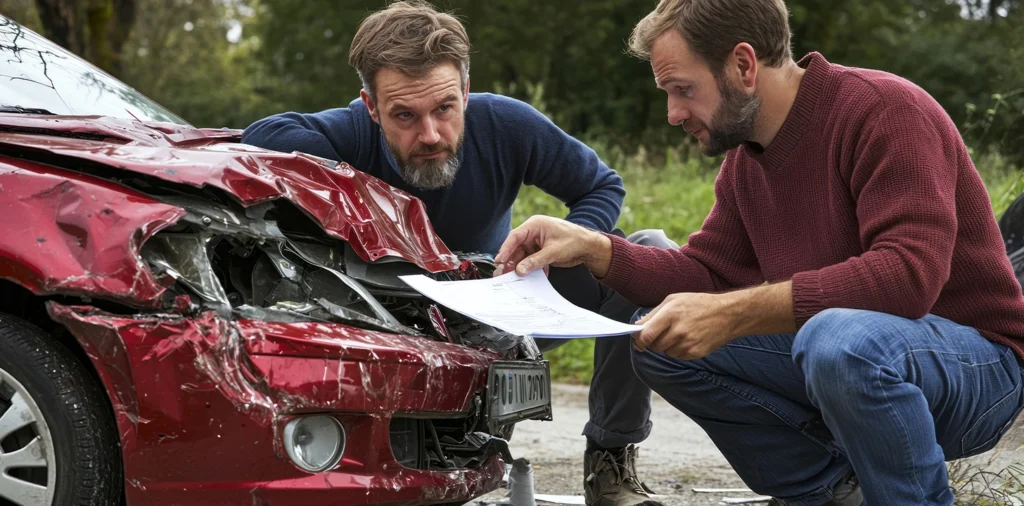
If another driver caused your crash, focus first on safety, medical care, evidence, and reporting. Move to a safe location when possible, call 911 when someone is injured or police assistance is needed, exchange information, photograph the scene, and notify your insurer. Do not assume an admission of fault or an initial insurance offer settles liability or determines your claim’s value. Texas law requires drivers in certain collisions to stop, provide information, and render aid.
For Houston drivers, the first hours after a collision can affect evidence available later. Seek medical attention, preserve photographs and records, and avoid guessing about fault when speaking with insurers. If the crash caused injuries, vehicle damage, or disputed liability, a Houston car accident attorney can explain your options and help identify evidence that may support your claim.
Steps to Take After a Car Accident That’s Not Your Fault
If another driver caused your accident, prioritize safety, medical care, evidence, and accurate reporting. Do not argue about fault at the scene or assume the other driver’s insurance will automatically cover everything. In Texas, drivers involved in certain crashes have legal duties to stop, provide required information, and render aid. Taking the following steps can help protect your health, preserve important evidence, and support a potential insurance or personal injury claim.
1. Check for Injuries and Get Medical Care
Check yourself and your passengers for injuries immediately. Call 911 if anyone has serious pain, bleeding, difficulty breathing, loss of consciousness, or another emergency condition. If you are injured, seek medical attention promptly and follow your healthcare provider’s instructions.
Even if you initially feel fine, monitor yourself for symptoms that develop after the crash. Keep medical bills, prescriptions, diagnostic results, discharge instructions, and follow-up records. These documents can help establish the treatment you received and the expenses associated with your injuries.
2. Call the Police When Appropriate
Contact law enforcement when the crash involves injuries, significant damage, a suspected impaired driver, a hit-and-run, or circumstances requiring police assistance. Texas Transportation Code §550.021 addresses crashes involving injury or death, while §550.022 addresses certain crashes involving vehicle damage.
A police report can document information about the collision, but it does not automatically determine civil liability. In Houston, the Houston Police Department explains that its accident reports are Texas Peace Officer’s Crash Reports filed with TxDOT. If officers respond, provide accurate factual information and avoid arguing with the other driver about who caused the collision.
3. Exchange Information With the Other Driver
If it is safe to do so, obtain the other driver’s name, contact information, driver’s license information, license plate number, insurance company, and policy information. Provide the information required from you as well.
Photograph the other driver’s insurance card and license plate if possible. If the driver refuses to provide information, appears impaired or aggressive, or leaves the scene, do not put yourself at risk by confronting or following them. Contact law enforcement and document what you can safely observe.
4. Photograph and Preserve the Accident Scene
Take photographs and videos of the vehicles and surrounding area when it is safe. Capture vehicle damage, license plates, vehicle positions, traffic signs and signals, road conditions, debris, visible injuries, and relevant surroundings. For crashes in Houston, photographs may also help document conditions at busy intersections, frontage roads, or highways.
How Do You Report a Car Accident to Insurance?
Notify your insurer as soon as reasonably possible and follow your policy’s reporting requirements. The Texas Department of Insurance recommends documenting when you contact the insurance company, who you speak with, the adjuster’s name, and any information requested. TDI also advises keeping photographs, receipts, medical records, and other documents related to your claim.
If the other driver caused the crash, you may pursue a claim against that driver’s liability insurer. Depending on your policy and circumstances, collision coverage or uninsured/underinsured motorist coverage may also be relevant. TDI explains that the at-fault driver’s insurance may pay for covered vehicle damage, while your own collision coverage may provide another option. If an insurer disputes liability, undervalues your losses, or refuses to pay, preserve the written explanation, repair estimates, photographs, medical records, and correspondence. Some insurance policies also contain an appraisal process for disputes concerning the amount of property damage. If you are dealing with significant injuries or a contested insurance claim, a Houston personal injury lawyer near me can review the circumstances and explain your legal options.
What Should You Tell the Insurance Adjuster?
Tell the truth and provide accurate facts, but do not speculate about facts you do not know. Do not guess about your future medical condition or the ultimate value of your claim. Keep copies of statements, emails, estimates, and settlement offers. Before signing a release, determine whether it resolves vehicle damage only or also injury claims. TDI recommends keeping copies of claim documents and notes of communications with the insurer.
What Evidence Do You Need After a Car Accident?
Preserve evidence that connects the crash to your injuries and losses. Keep photographs and videos, police or accident reports, witness information, medical records, bills, repair estimates, towing and rental-car receipts, insurance correspondence, and employment records when an injury affects your work.
Serious or disputed crashes may involve traffic-camera footage, business surveillance, witness photographs, vehicle event data, and records. Evidence should be identified promptly because availability and preservation periods can vary.
What If the Other Driver Was Uninsured?
An uninsured driver does not necessarily mean you have no potential source of recovery. Texas auto policies may include uninsured/underinsured motorist coverage, depending on the policy and circumstances. TDI identifies this as an available type of auto coverage. If the other driver has no insurance or insufficient coverage, review your policy and report the collision to your insurer. Whether coverage applies, what limits are available, and what procedures must be followed are fact-specific.
Read Related: How Long do Car Insurance Claims Take to Settle
What If You Were Partly at Fault?
Fault is not always all-or-nothing. Texas uses proportionate responsibility in covered tort actions. Under Civil Practice and Remedies Code §33.001, a claimant whose percentage of responsibility is greater than 50 percent may not recover damages in an action to which Chapter 33 applies.
If your responsibility is 50 percent or less, the amount recoverable can be affected by the percentage assigned under applicable rules. Evidence may include traffic movements, photographs, witnesses, vehicle damage, and other records.
How Long Do You Have to File a Car Accident Claim in Texas?
Texas Civil Practice and Remedies Code §16.003 generally requires suit for personal injury and certain property-damage claims within two years after the cause of action accrues. This is a statute of limitations, meaning a legal deadline for filing a lawsuit. Exceptions and different claims can change the analysis.
Do not treat two years as a reason to wait. Insurance negotiations and evidence collection should begin earlier because witnesses and records may become harder to locate. A lawyer can evaluate the applicable deadline.
What Should You Avoid After a Car Accident?
Avoid common mistakes that can complicate a claim:
- Do not leave the scene when Texas law requires you to remain.
- Do not admit fault or argue about liability at the scene.
- Do not post detailed descriptions or accusations online.
- Do not discard damaged property or repair documents.
- Do not ignore symptoms or skip recommended medical follow-up.
- Do not exaggerate injuries, losses, or crash details.
- Do not sign a final release without understanding which claims it resolves.
When Should You Contact a Car Accident Lawyer?
Consider legal guidance when a crash involves significant injuries, disputed fault, a fatality, an uninsured or underinsured driver, multiple vehicles, a commercial vehicle, substantial property damage, or an insurer that disputes liability or claim value. A lawyer can review evidence, explain potential claims, and help you understand the process. A search for a car accident lawyer near me may produce many options. Look for a Texas-licensed lawyer who handles the type of accident and claim involved.
Don’t Wait to Protect Your Car Accident Claim
If another driver caused your crash, taking action early can help protect important evidence, document your losses, and give you a clearer understanding of your legal options. Insurance companies may investigate the accident and evaluate your claim based on the information available to them, so preserving photographs, medical records, repair documents, and communications should not be delayed.
You do not have to navigate a disputed liability decision, insurance denial, or injury claim on your own. If you were injured or are concerned about whether the insurance company is offering fair compensation, speaking with a qualified Texas attorney can help you understand what may apply to your situation. Contact The Law Office of Michael Bates at (832) 346-2311 to discuss your accident and learn about your potential legal options.
