
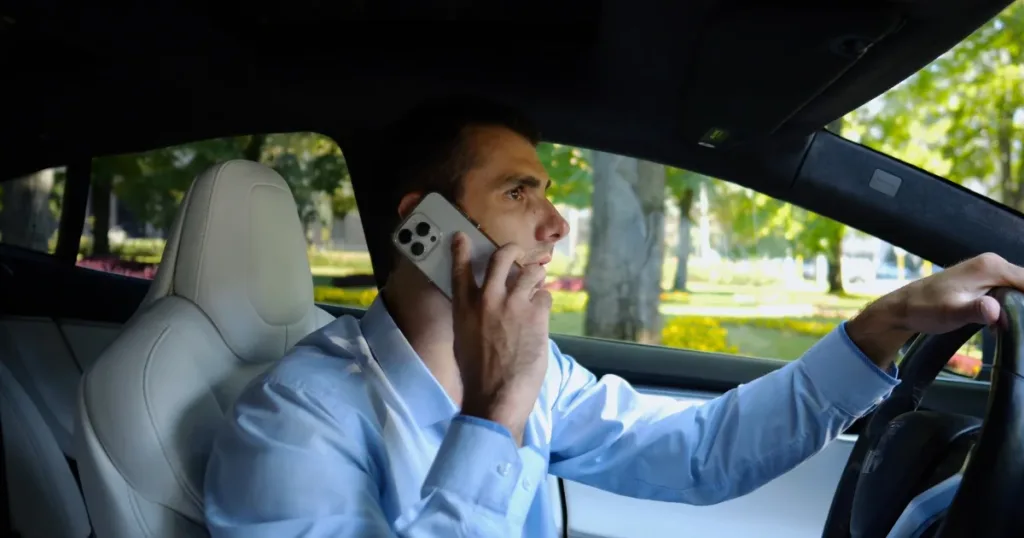
Distracted driving occurs when a driver takes their attention away from the task of safely operating a vehicle. Distractions can involve looking away from the road, taking the hands off the steering wheel, or thinking about something other than driving. Common examples include texting, using a cellphone, eating, adjusting vehicle controls, talking with passengers, and interacting with objects inside the vehicle.
For someone injured in a distracted driving accident in Houston, identifying what the driver was doing before and during the collision can be important when evaluating responsibility. A Houston distracted driving accident lawyer may review accident reports, witness statements, photographs, video footage, cellphone records, and other evidence to determine how the crash occurred and whether distracted driving may have contributed to the injuries.
What Is Considered Distracted Driving?
Distracted driving includes any activity that takes a driver’s visual, manual, or mental attention away from driving. A driver does not have to be holding a cellphone to become distracted. The National Highway Traffic Safety Administration (NHTSA) generally identifies three main types of driver distraction: visual, manual, and cognitive.
Visual Distraction
Visual distraction occurs when a driver looks away from the roadway. This can prevent the driver from noticing traffic changes, pedestrians, or other hazards in time. Examples include:
- Looking at a cellphone
- Reading a text message
- Looking at a GPS screen
- Watching something inside the vehicle
- Looking for an object
- Turning to speak with a passenger
Even looking away from the road for a short period can reduce the time available to respond to changing traffic conditions.
Manual Distraction
Manual distraction occurs when a driver takes one or both hands away from controlling the vehicle. This can make it harder to steer, brake, or respond quickly to unexpected situations. Examples include:
- Holding or using a cellphone
- Eating or drinking
- Adjusting the radio
- Reaching for an object
- Applying makeup
- Handling other objects while driving
Cognitive Distraction
Cognitive distraction occurs when a driver’s mind is focused on something other than driving. A driver may be looking at the road while still having reduced attention to the driving task.
Conversations, strong emotions, fatigue, or mentally demanding activities can affect how a driver processes traffic conditions. This may reduce awareness of hazards and delay a driver’s response when conditions suddenly change.
What Are the Most Common Causes of Distracted Driving?
Cellphone use is one of the most recognizable forms of distracted driving, but many everyday activities can also divert a driver’s attention. Distractions can happen inside or outside the vehicle. Common causes include:
- Texting or messaging
- Making or answering phone calls
- Using navigation applications
- Eating or drinking
- Talking with passengers
- Adjusting music or climate controls
- Looking at objects inside the vehicle
- Grooming
- Reaching for items
- Looking at something happening outside the vehicle
Read Related: What Is Considered Reckless Driving?
How Does Distracted Driving Cause Accidents?
Distracted driving can interfere with a driver’s ability to notice hazards, maintain control, and respond to changing traffic conditions. A distracted driver may fail to recognize a stopped vehicle, pedestrian, traffic signal, lane change, or other developing hazard. This delayed awareness can increase the risk of a collision and serious injuries.
For example, a driver looking down at a phone may travel a significant distance without properly observing the roadway. A driver distracted by a conversation may also fail to respond appropriately when traffic suddenly slows. Distracted driving can contribute to several types of collisions.
Rear-End Collisions
A distracted driver may fail to notice that traffic ahead has slowed or stopped. This can delay the driver’s reaction and increase the risk of hitting the vehicle in front. Rear-end crashes may result in injuries and vehicle damage.
Intersection Accidents
Drivers who are looking away from the roadway may fail to notice traffic signals, signs, pedestrians, or approaching vehicles. This can increase the risk of collisions when entering or crossing an intersection. Distracted drivers may also fail to yield when required.
Lane-Change Accidents
A distracted driver may fail to check surrounding traffic before changing lanes or may drift from the intended lane. This can result in a collision with a vehicle traveling in an adjacent lane. Sudden lane movements may also leave other drivers with little time to react.
Pedestrian and Bicycle Accidents
Failing to pay attention to the roadway can make it harder for drivers to notice pedestrians and cyclists. This risk can be greater near crosswalks, intersections, and areas with limited visibility. A delayed reaction may prevent the driver from avoiding a collision.
How Can You Prove Distracted Driving Causes a Car Accident?
Proving distracted driving generally requires evidence connecting the driver’s distraction to the collision. A police report alone may not establish every fact necessary for a civil claim. Multiple types of evidence may help show what the driver was doing before and during the accident.
Witness Statements
Passengers, pedestrians, other drivers, and other witnesses may have observed the driver using a cellphone or looking away from the road. Their statements may help establish that the driver was distracted immediately before the collision.
Cellphone Records
Depending on the circumstances and applicable legal procedures, cellphone records may show whether a driver was communicating or using a device around the time of the crash. These records may help establish the timing of potential cellphone activity.
Surveillance and Dashcam Footage
Traffic cameras, business surveillance systems, vehicle cameras, and dashcams may capture the driver’s actions before a collision. Video footage can provide visual evidence of cellphone use, lane movement, or other distracting behavior.
Police and Accident Reports
An investigating officer may document statements, observations, citations, vehicle positions, and other information about the accident. These details may help establish what happened and identify possible evidence of distracted driving.
Vehicle and Electronic Data
Some vehicles contain electronic systems that may provide information about speed, braking, steering, or other aspects of a collision. The availability and significance of this information depend on the vehicle and circumstances.
Is Distracted Driving Illegal in Texas?
Texas law restricts certain cellphone use while driving, including texting and other electronic messaging in many circumstances. Texas Transportation Code §545.4251 addresses the use of portable electronic devices for electronic messaging while operating a motor vehicle.
Texas law also includes restrictions for certain drivers and situations, including school zones and drivers under 18. A traffic violation may provide evidence of a driver’s conduct, but it does not automatically determine liability in a related personal injury claim.
Can Distracted Driving Affect a Personal Injury Claim?
Distracted driving may become relevant to a personal injury claim when evidence shows that the driver’s distraction contributed to the accident and resulting injuries. The injured person generally still needs to establish the elements required for the applicable negligence claim. Evidence may help establish:
- What the driver was doing before the collision
- Whether the driver violated a traffic law
- How the driver’s conduct contributed to the accident
- What injuries resulted from the collision
- Medical expenses and treatment
- Lost income and other financial losses
- Other legally recoverable damages
Texas also applies proportionate-responsibility rules to covered claims. Under Texas Civil Practice and Remedies Code §33.001, a claimant generally cannot recover damages if the claimant’s responsibility is greater than 50%. When the claimant’s responsibility is 50% or less, damages may generally be reduced according to that percentage.
What Should You Do After a Distracted Driving Accident?
After a distracted driving accident, prioritize your safety and seek medical attention for any injuries. Document the accident and gather available evidence, consider these practical steps:
- Seek medical attention. Get evaluated for injuries and follow appropriate medical recommendations.
- Report the accident. Contact the appropriate authorities and obtain an accident report when applicable.
- Document the scene. Take photographs of the vehicles, road conditions, visible injuries, traffic signs, and surrounding area when reasonably possible.
- Identify witnesses. Record the names and contact information of people who observed the collision.
- Preserve evidence. Keep photographs, videos, vehicle-damage records, medical records, and relevant communications.
- Avoid deleting information. Preserve potentially relevant messages, photographs, and other electronic records.
- Track your losses. Keep documentation of medical expenses, missed work, treatment-related costs, and other accident-related losses.
- Consider legal advice. A distracted driving accident lawyer near me can review the available evidence and explain how Texas law may apply to the circumstances.
How Long Do You Have to File a Distracted Driving Injury Lawsuit in Texas?
Texas Civil Practice and Remedies Code §16.003 generally provides a two-year limitations period for personal injury lawsuits, measured from when the cause of action accrues. The statute includes exceptions and separate provisions that can apply to particular claims.
The filing deadline is separate from the time needed to investigate an accident or negotiate with an insurance company. Evidence such as surveillance footage, witness information, and electronic records can also become harder to obtain as time passes. A Houston personal injury attorney can evaluate the accident date, type of claim, and circumstances that may affect the applicable deadline.
Need Help After a Distracted Driving Accident?
Distracted driving can involve cellphone use, eating, conversations, vehicle controls, or other activities that divert a driver’s attention from the roadway. Evidence showing what the driver was doing and how that conduct contributed to the collision can be important in a personal injury claim.
If you were injured in a distracted driving accident in Houston, The Law Office of Michael Bates can be reached at (832) 346-2311 to discuss whether a consultation or case review is appropriate for your circumstances.
