
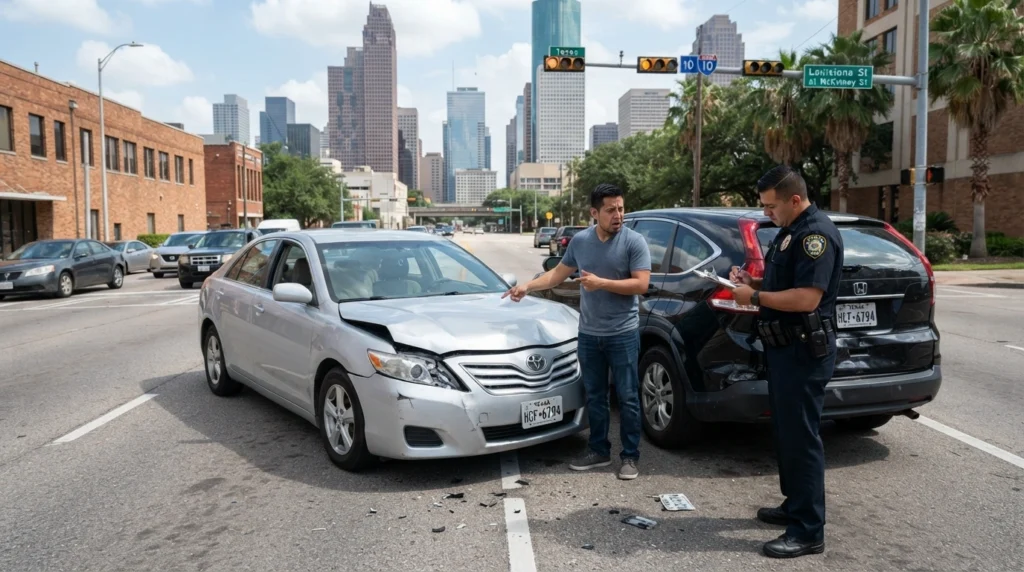
If you are at fault for a car accident in Houston, you may be responsible for some or all of another person’s losses, depending on the facts and each party’s percentage of responsibility. Texas uses proportionate responsibility, so being partly at fault does not automatically make you responsible for every dollar claimed. Your liability may depend on how the accident occurred, the evidence available, and the extent of the other party’s damages. Insurance coverage can also affect how a claim is handled. Understanding your legal and financial responsibilities after a crash can help you make informed decisions and avoid unnecessary mistakes.
A crash can create insurance, property-damage, and personal-injury issues. A car accident lawyer Houston can explain how fault and coverage may affect your car accident case. If another driver claims you caused the collision, your insurer may investigate the circumstances and determine whether the claim is covered under your policy. You may also face a demand for compensation if the other driver suffered injuries or property damage. Taking the situation seriously and understanding your rights can help you respond appropriately.
What Does It Mean to Be At Fault for a Car Accident in Texas?
Being “at fault” generally means your conduct is determined to have caused or contributed to the collision and resulting harm. Examples can include following too closely, failing to yield, speeding, unsafe lane changes, distracted driving, or impaired driving. Fault is not always obvious at the scene. Insurers may review statements, photographs, traffic evidence, vehicle damage, and other information before evaluating responsibility. The Texas Department of Insurance explains that liability insurance pays covered injuries and property damage you cause to others, subject to policy terms and limits.
Can You Still Be Liable If You Were Only Partly At Fault?
Yes. Texas follows modified comparative responsibility. Under Texas Civil Practice and Remedies Code §33.001, a claimant may not recover damages if the claimant’s percentage of responsibility is greater than 50%. If the claimant is 50% or less responsible, recoverable damages are reduced according to that percentage. For example, if another driver has $100,000 in proven damages and is found 20% responsible while you are 80% responsible, recoverable damages may be reduced to $80,000.
Your own recovery may also be reduced if you are assigned a percentage of responsibility.
What Happens to Insurance If You Caused the Crash?
If you caused a collision, the other driver may file a third-party liability claim against your insurer. Texas requires drivers to establish financial responsibility, and most drivers satisfy that requirement with auto liability insurance. Losses above available liability coverage may create additional financial exposure, depending on the facts and law.
The Texas Department of Insurance recommends reporting an accident to your insurance company as soon as possible and keeping records of claim communications and expenses. Its Texas auto insurance guidance explains the basic coverage framework. Liability coverage generally addresses covered bodily injury and property damage you cause to another person. Damage to your own vehicle may require collision coverage. Coverage varies by policy, so review the policy terms rather than assuming a particular loss is covered.
Read Related: how an accident can affect your insurance in Texas
Can the Other Driver Sue You If You Caused the Accident?
Yes. If another person claims your negligence caused compensable injuries or property damage, they may pursue an insurance claim and, if necessary, a lawsuit. A lawsuit is not automatically proof of legal responsibility. The claimant must establish the applicable claim, and evidence or defenses may affect how responsibility is determined.
If a lawsuit is filed, do not ignore the court documents or miss any applicable deadlines. You should notify your insurance company and consider obtaining legal guidance so you understand your rights and obligations during the process. The Texas Judicial Branch’s trial-court information explains the general structure and functions of Texas trial courts. The specific court handling a case will depend on the facts, amount in controversy, and applicable jurisdictional rules.
What Damages Could an At-Fault Driver Be Responsible For?
If you are found legally responsible for a car accident, the injured party may seek compensation for losses caused by the crash. The amount depends on the severity of the injuries, property damage, available evidence, and each party’s percentage of responsibility. If you are facing a claim and need help understanding your potential liability, a personal injury lawyer Houston can review the circumstances and explain your legal options. Potential damages may include:
- Medical expenses: Costs for emergency treatment, hospital stays, doctor visits, medication, physical therapy, rehabilitation, and reasonably necessary future medical care.
- Lost income: Wages lost because of accident-related injuries, as well as potential loss of future earning capacity when injuries affect the person’s ability to work.
- Pain and suffering: Compensation may be available for physical pain and the effects an injury has on a person’s daily life and well-being.
- Emotional distress: Depending on the circumstances and applicable law, an injured person may seek compensation for emotional or psychological harm associated with the accident.
- Property damage: This may include vehicle repair costs, the value of a totaled vehicle, and damage to other personal property caused by the collision.
What Should You Do If You Think You Caused the Accident?
If you believe you were responsible, take practical steps to preserve evidence and comply with your obligations.
- Check for injuries and call 911 when emergency assistance is needed.
- Remain at the scene and exchange required information.
- Document vehicles, roadway conditions, traffic controls, and visible damage when safe.
- Report the accident to your insurance company promptly.
- Preserve photographs, videos, witness information, medical records, repair estimates, and claim correspondence.
- Be accurate with insurers and investigators. Do not guess about facts you do not know.
- Do not destroy, alter, or hide evidence.
- Review any demand letter, lawsuit, or settlement document carefully before responding.
Texas Transportation Code §550.026 addresses when certain collisions must be reported. Generally, a driver involved in a collision resulting in injury, death, or damage that leaves a vehicle unable to be normally and safely driven must immediately give notice to the appropriate law enforcement agency.
What If the Other Driver’s Insurance Company Contacts You?
If the other driver’s insurer contacts you, provide truthful information, but do not speculate or accept the insurer’s assessment of fault simply because an adjuster says you caused the crash. Keep records of communications and preserve relevant documents. The Texas Department of Insurance recommends documenting the accident and keeping medical records, bills, and claim information. Its insurance claim guidance explains the process. If the insurer disputes liability or requests a recorded statement or settlement, consider legal guidance before responding.
When Should You Contact a Houston Car Accident Attorney?
Consider speaking with a qualified Texas attorney if the accident caused significant injuries, liability is disputed, multiple drivers are involved, the other party is demanding substantial compensation, or you have received legal papers. Legal guidance may also be useful when another driver alleges you were entirely responsible while the evidence suggests shared fault. If you are searching for a car accident attorney near me, choose counsel familiar with Texas law and your circumstances.
How Long Can a Car Accident Case Take?
There is no single timeline for every Texas car accident case. A straightforward property-damage claim may resolve faster than a case involving serious injuries, disputed fault, multiple insurers, or litigation.
For personal injury claims, Texas Civil Practice and Remedies Code §16.003 generally provides a two-year limitations period for bringing suit, subject to statutory exceptions and other rules. This is a lawsuit deadline, not a rule allowing an insurance claim to wait two years before being reported. Because limitations rules can depend on the facts, review the deadline for your case.
Read Related: how long car insurance claims take to settle
What If You Were Uninsured When You Caused the Accident?
Being uninsured can create additional problems. Texas requires financial responsibility for vehicles operated in the state, subject to statutory exceptions. The Texas Department of Insurance explains that most drivers meet this requirement through liability insurance. If you caused a crash without applicable insurance, you may have to address the other party’s demand directly, and a judgment or settlement could create personal financial consequences. Coverage depends on the policy. Do not assume that an insurance problem means you automatically owe every amount claimed. Liability and damages still must be evaluated under applicable law.
How The Law Office of Michael Bates Can Help
An at-fault accident can raise difficult questions about liability, insurance coverage, comparative responsibility, and potential damages. The right response depends on the evidence, policy, and circumstances. The Law Office of Michael Bates can review the facts of your accident, help you understand the legal issues involved, and explain potential next steps. Legal guidance may be useful when injuries are serious, fault is disputed, coverage is unclear, or a lawsuit is threatened or filed.