
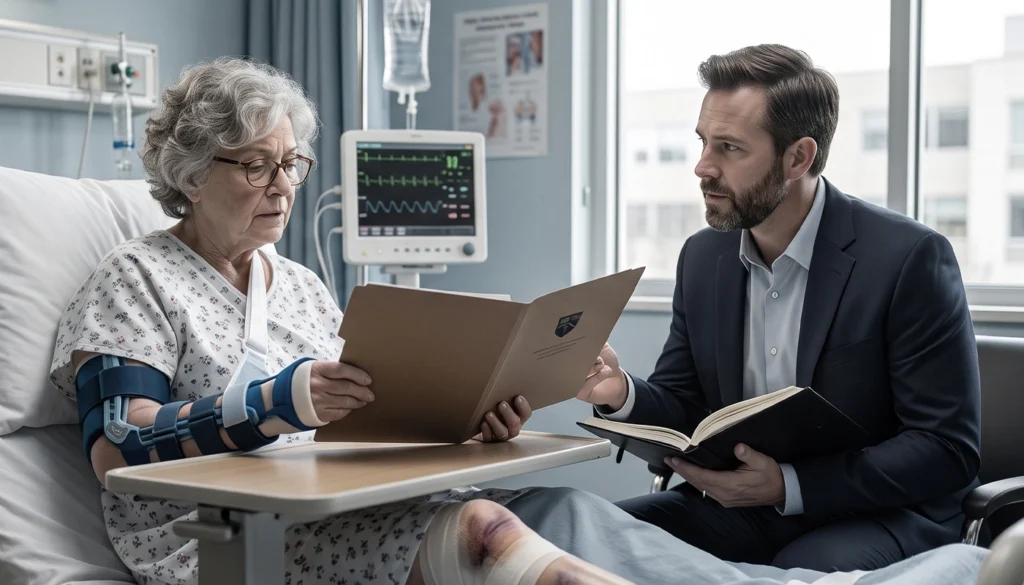
To prove negligence in a personal injury case in Texas, an injured person generally must establish that the defendant owed a legal duty, breached that duty, and caused legally recoverable damages through that breach. Texas courts describe these as core elements of a common-law negligence claim. The evidence may include photographs, witness statements, medical records, surveillance footage, accident reports, employment records, expert opinions, and other documents that connect the defendant’s conduct to the injury. The precise requirements can vary depending on the type of accident and legal claim.
For someone injured in Houston, building that connection can involve more than showing that another person made a mistake. A personal injury lawyer Houston victims consult may examine what happened before, during, and after the incident, identify potentially responsible parties, and organize evidence supporting duty, breach, causation, and damages. Texas law also considers an injured person’s own responsibility for an accident. That means proving negligence requires a complete factual picture rather than relying on one piece of evidence.
What Must You Prove in a Texas Personal Injury Case?
A negligence claim generally requires proof of a legal duty, a breach of that duty, and damages approximately caused by the breach. In practical terms, you must show what the other party was required to do, how the party failed to act reasonably, how that failure caused the injury, and what losses resulted.
Texas courts have identified duty, breach, and damages approximately resulting from the breach as elements of a common-law negligence claim. The Texas Supreme Court has also explained that determining whether a legal duty exists is a threshold issue.
1. Establish That the Defendant Owed You a Duty
A legal duty is an obligation recognized by law to act, or sometimes refrain from acting, in a particular manner. The duty depends on the relationship between the parties and the circumstances.
For example, drivers generally have duties concerning the safe operation of vehicles. A property owner or occupier may have duties concerning certain dangerous conditions, depending on the circumstances. A healthcare provider’s responsibilities can involve different legal standards from those governing an ordinary automobile accident. The existence and scope of duty can become disputed. Therefore, identifying the correct legal theory is an important first step in any personal injury claim.
2. Show That the Defendant Breached the Duty
A breach occurs when the defendant fails to act as a reasonably careful person or entity would under the circumstances, when that standard applies. Evidence should identify the specific conduct that allegedly fell below the required standard.
Examples can include distracted driving, unsafe lane changes, failing to address a known hazard, inadequate safety practices, or other conduct that the evidence shows was unreasonable. A traffic citation or regulatory violation may support a negligence argument, but it does not automatically resolve every issue in a civil claim. The facts must still establish the legally relevant connection between the conduct and the injury.
3. Prove Causation
Causation connects the alleged negligent conduct to the injury. Texas negligence law commonly discusses both cause in fact and proximate cause. In plain English, the evidence must show that the defendant’s conduct was sufficiently connected to the harm rather than merely occurring before it.
This issue can become complicated when an injured person has preexisting conditions, multiple accidents, delayed symptoms, or several potentially responsible parties. Medical records, accident reconstruction, expert opinions, photographs, timelines, and witness testimony can help explain what caused the injury. Under Texas Rule of Evidence 702, qualified experts may provide opinions when their specialized knowledge will help the factfinder understand evidence or determine a fact in issue.
4. Document Your Damages
Damages are the losses for which compensation may be legally available. Depending on the claim, evidence can include medical expenses, lost income, physical pain, impairment, disfigurement, and other legally recognized losses. Documentation should show both what happened and how the injury affected the person’s life.
Useful records may include:
- Medical bills and treatment records
- Prescription and rehabilitation records
- Wage and employment documentation
- Property-damage records
- Photographs of injuries and accident conditions
- Personal journals documenting symptoms and limitations
- Statements from people who observed changes after the injury
What Evidence Can Prove Negligence?
Evidence that may help prove negligence includes photographs, videos, eyewitness testimony, accident or incident reports, medical records, physical evidence, electronic records, communications, and qualified expert testimony. The strongest evidence usually forms a consistent factual chain showing the defendant’s conduct, the accident, the injury, and the resulting damages.
In Houston, available evidence may differ depending on whether the incident occurred on a roadway, at a business, at a private property, or in another setting. Surveillance footage can be especially time-sensitive because businesses and property owners may have retention policies that determine how long recordings remain available.
Relevant evidence may include:
Photographs and Video
Take photographs of the accident scene, visible hazards, vehicle positions, property damage, road conditions, and injuries when reasonably possible. Dashcam footage, security video, and cellphone recordings may also help establish timing and conduct.
Witness Statements
Independent witnesses can provide information about what they saw, heard, or observed immediately before and after the incident. Their contact information can become important if the facts are later disputed.
Medical Evidence
Medical records can document diagnoses, treatment, symptoms, restrictions, and the progression of an injury. Prompt medical evaluation can also create contemporaneous documentation of complaints and treatment.
Accident and Incident Reports
Police reports, workplace reports, property incident reports, or other official records may contain useful factual information. Their evidentiary significance depends on the circumstances and applicable evidence rules.
Electronic and Business Records
Depending on the accident, relevant records can include text messages, emails, surveillance footage, vehicle data, maintenance records, employment records, or other electronically stored information.
Read Related: personal injury lawsuit in Texas
Can Witnesses and Experts Help Prove Negligence?
Yes. Witnesses can describe what they personally observed, while qualified experts may address specialized questions such as accident reconstruction, medical causation, engineering, or other technical matters. An expert is not automatically necessary in every personal injury case. Whether expert testimony is appropriate depends on the issues that must be proved and the type of evidence available. Texas Rule of Evidence 702 requires the expert to be qualified by knowledge, skill, experience, training, or education and requires the testimony to assist the factfinder.
For example, a straightforward rear-end collision may rely heavily on photographs, witnesses, traffic evidence, and vehicle damage. A complicated collision involving multiple vehicles or disputed speeds may require more technical analysis.
How Does Comparative Negligence Affect a Texas Injury Claim?
Texas follows a proportionate-responsibility system for covered claims. If an injured person’s responsibility is 50% or less, the person’s damages can generally be reduced according to that percentage. If the person’s responsibility is greater than 50%, Texas Civil Practice and Remedies Code §33.001 generally bars recovery of damages in an action subject to the chapter.
For example, if a claimant is found 20% responsible, a covered damages award may generally be reduced by that percentage. The precise application depends on the claims and parties involved. The Texas Legislature’s current statute provides the greater-than-50-percent bar in §33.001 and establishes the broader framework for proportionate responsibility in Chapter 33.
What Should You Do to Build a Negligence Claim?
After addressing immediate medical needs, consider these practical steps:
- Identify witnesses. Record names and contact information for people who observed the incident.
- Document the timeline. Write down important facts while your memory is fresh, including where, when, and how the incident occurred.
- Avoid deleting communications. Preserve potentially relevant texts, emails, photographs, and electronic records.
- Be careful with statements. Provide accurate information, but avoid speculation about legal responsibility or the full extent of an injury before the facts are established.
- Track losses. Keep records of medical expenses, missed work, treatment-related costs, and other documented effects.
- Consider legal advice promptly. A Houston personal injury lawyer near me may identify local attorneys, but the appropriate choice depends on the attorney’s ability to evaluate the facts, applicable Texas law, and the evidence involved.
Read Related: how to file a personal injury claim in Texas
How Long Do You Have to File a Personal Injury Lawsuit in Texas?
Texas Civil Practice and Remedies Code §16.003 generally provides a two-year limitations period for personal injury lawsuits, measured from when the cause of action accrues. The statute also contains exceptions and separate provisions for particular types of claims.
The limitations period is different from the amount of time needed to gather evidence or negotiate with an insurer. Waiting until the deadline is close can create practical problems, particularly if witnesses become difficult to locate or evidence is no longer available. A Houston personal injury attorney can evaluate whether a limitations issue, governmental defendant, minor claimant, wrongful-death claim, or another exception could affect the applicable deadline.
Need Help Proving Negligence in Your Personal Injury Case?
For Houston residents, the circumstances of the accident may determine which records, witnesses, experts, and legal rules become important. Texas proportionate-responsibility law can also make evidence concerning shared fault significant. Because limitations periods and other legal requirements can affect a claim, prompt attention to evidence and deadlines is important. If you are trying to determine whether another party may be legally responsible for your injuries, The Law Office of Michael Bates can be reached at (832) 346-2311 to discuss whether a consultation or case review is appropriate for your circumstances.