
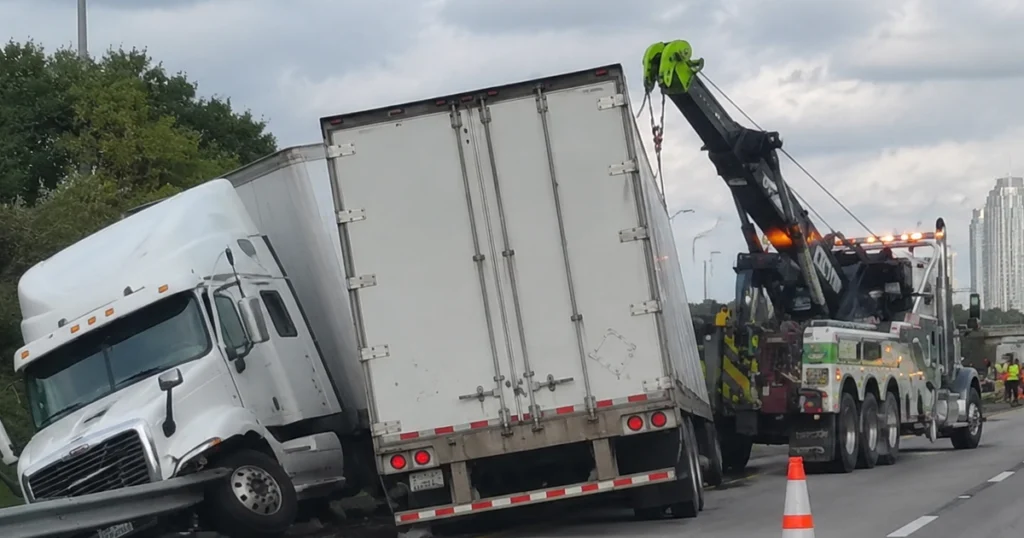
Truck accidents are rarely simple, and determining who is actually responsible for one is often far more complicated than in a typical car accident. A commercial truck operates as part of a larger business system involving drivers, trucking companies, cargo loaders, maintenance providers, and sometimes manufacturers. Any one of these parties can share legal responsibility depending on what caused the crash. Understanding how liability works in Texas is the first and most important step toward protecting your rights and recovering the compensation you deserve after a serious collision.
Texas consistently leads the nation in fatal large truck crashes, making liability disputes in these cases both common and high stakes. Insurance companies representing trucking operations are aggressive and well prepared, which is exactly why working with an experienced Houston truck accident lawyer who understands how fault is legally established makes such a significant difference in the outcome of your claim.
Who Can Be Held Liable in a Texas Truck Accident?
Unlike a standard car accident, where liability typically falls on one of two drivers, truck accident cases can involve multiple responsible parties depending on the specific circumstances of the crash. Identifying every liable party is critical because it directly determines how much compensation may be available and which insurance policies can be pursued.
The Truck Driver
The driver is often the first party investigated after a truck accident, and driver error remains one of the most common causes of serious commercial vehicle crashes in Texas. Speeding, distracted driving, driving while fatigued, impaired operation, and failure to check blind spots before changing lanes are all forms of negligence that can place direct liability on the driver. Electronic logging devices and black box data often reveal whether a driver violated federal hours of service rules or other regulations that contributed directly to the crash.
The Trucking Company
Trucking companies can be held liable under the legal doctrine of respondeat superior, which holds employers responsible for the negligent actions of their employees while on the job. Beyond this, companies face direct liability for negligent hiring practices, failure to conduct proper background checks, inadequate driver training, and pressuring drivers to violate hours of service regulations to meet unrealistic delivery schedules. Trucking companies often attempt to classify drivers as independent contractors to distance themselves from liability, which is one of the reasons a thorough investigation into the employment relationship is so important.
Cargo Loaders and Shippers
An improperly loaded or unsecured cargo load can shift during transit, causing a trailer to become unstable or spill onto the roadway and create hazardous conditions for surrounding vehicles. When a crash is caused or worsened by cargo that was not loaded, secured, or distributed correctly, the company responsible for loading the freight can be held liable alongside the driver and trucking company. Freight brokers and shippers who impose unrealistic delivery demands that push drivers to take unsafe shortcuts may also share responsibility in certain cases.
Maintenance Providers and Manufacturers
When a mechanical failure contributes to a truck accident, liability may extend to the shop that performed maintenance on the vehicle or the manufacturer of a defective part. Faulty brakes, blown tires, defective steering components, and underperforming safety systems are all examples of equipment failures that can form the basis of a product liability or negligent maintenance claim. Identifying whether a mechanical defect played a role requires early investigation and preservation of the vehicle before evidence is repaired or destroyed.
How Is Fault Determined in a Truck Accident?
Proving fault in a Texas truck accident requires establishing negligence, which means showing that the responsible party owed a duty of care, breached that duty, and that the breach directly caused the crash and your resulting injuries and damages. Every element must be clearly supported by evidence, and working with a truck accident lawyer near me from the very beginning ensures the investigation is handled correctly before critical evidence disappears.
- Police Report: Law enforcement documents the accident scene, any citations issued, officer observations, and initial fault determinations that serve as a critical starting point
- Black Box Data: The truck’s electronic control module records speed, braking, throttle position, and other operational data in the moments before the crash
- Driver Logs and ELD Records: Electronic logging devices reveal whether the driver violated federal hours of service rules and how long they had been behind the wheel
- Maintenance Records: Service and inspection records show whether the truck was properly maintained and whether known defects were ignored or addressed
- Witness Statements: Eyewitness accounts from other drivers, pedestrians, or bystanders can provide independent confirmation of how the crash occurred
- Accident Reconstruction: Expert analysis physically recreates the sequence of events to establish speed, impact angles, and the actions of each party immediately before the collision
What Role Do Federal Trucking Regulations Play in Liability?
Commercial trucks in Texas are governed by both state law and federal regulations from the Federal Motor Carrier Safety Administration. Violating these rules serves as powerful evidence of negligence and significantly strengthens a liability claim. A Houston personal injury attorney who understands FMCSA regulations can use these violations to build a much stronger case on your behalf.
- Hours of Service Limits: Restrict how long a driver can operate without rest to prevent fatigue-related crashes
- Vehicle Inspection Standards: Require regular maintenance to ensure trucks are safe to operate on public roads
- Drug and Alcohol Testing: Mandate pre-employment, random, and post-accident testing for all commercial drivers
- Cargo Securement Rules: Govern how freight must be loaded and tied down to prevent shifting during transit
- Minimum Insurance Requirements: Commercial carriers must carry coverage far exceeding standard passenger vehicle policies
When understanding how truck accident lawsuits work in Texas, FMCSA violations are critical because they establish a clear standard of care that the defendant failed to meet.
How Does Texas Comparative Fault Affect Your Claim?
Texas follows a modified comparative fault rule, meaning compensation is adjusted based on each party’s percentage of fault. Under Texas Civil Practice and Remedies Code Section 33.001, you can still recover compensation as long as you are found 50 percent or less at fault for the crash.
- If you are 20 percent at fault on a $200,000 award, your recovery is reduced to $160,000
- If you are found more than 50 percent responsible, you are barred from recovering anything at all
- Insurance companies actively try to shift blame onto the passenger vehicle driver to push their fault above 50 percent and eliminate liability entirely
Having an attorney who understands this tactic and can challenge an unfair fault assignment is one of the most important protections you have in a Texas truck accident case.
What Evidence Is Used to Prove Truck Accident Liability?
Evidence in truck accident cases disappears quickly. Trucks are repaired, logbooks are altered, and black box data can be overwritten within days of a crash, making prompt action to preserve evidence one of the most critical steps after any serious collision. Knowing what to do after a truck accident in Texas immediately following a crash protects your ability to gather this evidence before it is gone.
- Sending a legal spoliation letter to the trucking company demanding preservation of all vehicle data, logs, and maintenance records
- Securing dashcam footage, traffic camera video, or any available surveillance recordings from nearby businesses
- Obtaining the truck driver’s complete employment history, driving record, and drug and alcohol test results
- Reviewing shipping and dispatch records to identify whether unrealistic delivery schedules contributed to driver fatigue or unsafe behavior
- Working with accident reconstruction experts who can analyze skid marks, vehicle damage patterns, and impact data to establish exactly how the crash occurred
Why Legal Representation Matters
Truck accident liability cases are among the most complex personal injury claims in Texas, and the trucking companies and their insurers have experienced legal teams working from the moment a crash is reported. Attempting to navigate this process without representation puts you at a serious disadvantage when the other side has vastly more resources and experience in these specific types of cases.
- Conducts a thorough independent investigation to identify every liable party before evidence disappears or is destroyed
- Sends immediate spoliation letters to preserve black box data, driver logs, and maintenance records
- Challenges any comparative fault assignments that the insurance company uses to unfairly shift blame onto you
- Handles all communication with multiple insurance carriers, so nothing you say reduces your compensation
- Prepares your case for the full truck accident claim process and for trial if a fair settlement cannot be reached through negotiation
Injured in a Texas Truck Accident? Contact the Law Office of Michael Bates
Determining liability in a truck accident is a complex, time-sensitive process that requires experience, resources, and a clear understanding of both Texas law and federal trucking regulations. At the Law Office of Michael Bates, we investigate every angle of truck accident cases and fight to hold every responsible party accountable for the full extent of your damages. If you or a loved one was injured in a truck accident in Texas, contact us today for a free case evaluation with no fee unless we win.