
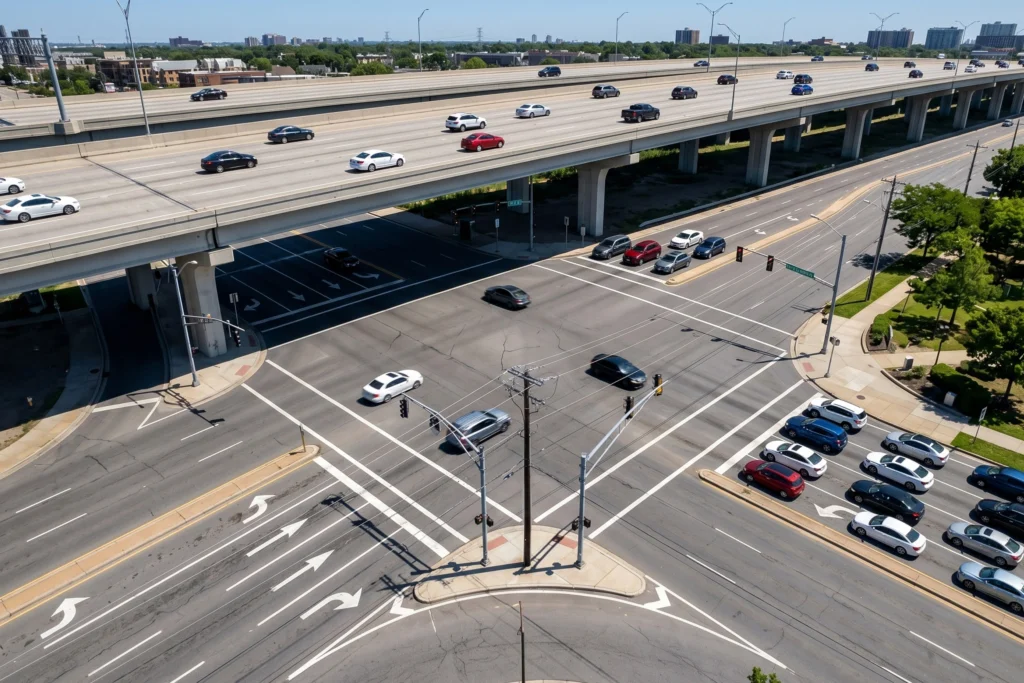
Many Texas drivers assume that changing lanes inside an intersection is automatically illegal, but the reality is more nuanced than most people realize. There is no specific statute in the Texas Transportation Code that outright bans lane changes in intersections, yet drivers can still receive a citation if an officer determines the maneuver was unsafe. Understanding exactly where the law draws the line can help you make smarter decisions on the road and protect yourself legally if you are ever involved in a lane change accident at an intersection.
Whether you are trying to avoid a ticket or understand your rights after a collision, knowing how Texas law handles this situation matters. The distinction between a legal lane change and an unsafe one can be the difference between avoiding liability and needing an intersection accident lawyer after a crash.
What Does Texas Law Say About Lane Changes?
The Texas Transportation Code does not include a specific statute saying lane changes inside intersections are prohibited outright. However, two key statutes govern how all lane changes must be handled on Texas roads, regardless of where they occur.
Under Texas Transportation Code Section 545.060, drivers on multi-lane roadways must stay as nearly as practicable within a single lane and may not move from that lane unless the movement can be made safely. Under Texas Transportation Code Section 545.104, drivers must signal their intent to change lanes before making any move. Combining these two requirements means that even if changing lanes in an intersection is not technically banned, doing it unsafely or without signaling is a clear violation of Texas law.
Is It Illegal to Change Lanes in an Intersection in Texas?
Not automatically, but it depends entirely on the road markings and whether the maneuver can be made safely. If an unsafe lane change leads to a crash, speaking with a car accident attorney near me can help you understand your legal rights.
- Divided white lines: If the lane markings at the intersection are divided white lines, a lane change may be permitted as long as it is done safely and with proper signaling
- Solid white lines: Crossing a solid white line to change lanes is a violation, and many intersections use solid lines specifically to discourage lane changes in those areas
- Double yellow center lines: Crossing a double yellow center line at or through an intersection is illegal under Texas law, regardless of the circumstances
- Turn lanes: Entering a turn lane and then attempting to leave it mid-intersection to go straight is a violation that can cause serious accidents and result in a citation
- No lane change signs: If signage or road markings explicitly prohibit lane changes near or within an intersection, making one regardless of safety is a direct violation
What Are the Penalties for an Unsafe Lane Change in Texas?
An unsafe lane change in Texas is classified as a Class C misdemeanor and carries real consequences that can affect your driving record, your insurance premiums, and your legal standing if an accident results from the violation.
- A fine of up to $200, though court costs typically increase the total amount paid
- Two points are added to your Texas driving record, which remain for several years
- Potential license suspension if four or more moving violations accumulate within 12 months
- Increased insurance premiums since insurers view moving violations as indicators of higher risk
- Full legal liability for any accident caused by the unsafe lane change, including the other driver’s medical bills, property damage, and lost wages
Who Is at Fault in a Lane Change Accident in Texas?
Texas follows a modified comparative fault rule, meaning fault is assigned based on each party’s contribution to the accident and compensation is reduced accordingly. In most intersection lane change accidents, the driver who made the unsafe maneuver bears the primary responsibility.
When the Lane Changer Is at Fault
If a driver changes lanes inside an intersection without signaling, crosses a solid line, or cuts off another vehicle already legally occupying the target lane, that driver is almost always found at fault. The vehicle already in the lane has the right of way, and failing to yield before entering that lane is a clear violation of Texas law. If injuries occur, a Houston personal injury attorney can help pursue compensation for the damages resulting from the collision.
When Fault Can Be Shared
In some cases, both drivers may share partial responsibility depending on the specific circumstances of the accident. For example, if the vehicle in the target lane was speeding, failed to signal, or made an abrupt move that contributed to the crash, fault may be divided between both parties. Under Texas Civil Practice and Remedies Code Section 33.001, you can still recover compensation as long as you are found 50 percent or less at fault, though your total recovery is reduced by your percentage of responsibility.
Why Intersection Lane Changes Are Especially Dangerous
Even when a lane change at an intersection is technically legal based on road markings, it remains one of the most dangerous maneuvers a driver can make and one that is directly linked to reckless driving behavior in many accident investigations.
- Intersections are already high-risk areas where vehicles from multiple directions converge at the same time
- Reduced visibility at intersections makes it harder for other drivers to anticipate or react to a sudden lane change
- Pedestrians crossing legally may not expect a vehicle to shift lanes mid-intersection and can be struck as a result
- Turning vehicles may already be committed to their maneuver and have no room to avoid a driver who unexpectedly changes lanes
- The combination of cross traffic, signals, and turning movements leaves almost no margin for error during a lane change attempt
What Should You Do After a Lane Change Accident?
If you are involved in a collision caused by an unsafe lane change at an intersection, the steps you take immediately after can significantly affect your ability to recover compensation. Knowing what to do after a car accident in Texas protects both your health and your legal claim from the very beginning.
- Call 911 immediately and ensure a police report is filed documenting the accident and the lane change involved
- Take photos of the lane markings, vehicle positions, road signs, and any visible damage at the scene
- Collect contact and insurance information from the other driver and gather witness statements if possible
- Seek medical attention even if injuries seem minor, since many symptoms are delayed, and documentation matters
- Avoid admitting fault or making statements to the other driver’s insurance company before consulting an attorney
Why Legal Representation Matters
Lane change accidents at intersections often involve disputed fault, conflicting accounts of what happened, and insurance companies are quick to assign blame to minimize their payout. An experienced attorney investigates the scene, reviews traffic camera footage, and builds a clear picture of exactly what occurred and who was responsible.
- Gathers evidence, including police reports, witness statements, and road marking documentation, to establish fault accurately
- Challenges any unfair fault assignment from the insurance company under Texas comparative fault rules
- Calculates the full value of your damages, including medical bills, lost wages, and pain and suffering
- Handles all communication with insurers, so nothing you say is used to reduce your compensation
- Knows what a car accident lawyer does and puts that experience to work protecting your full recovery from day one
Involved in a Lane Change Accident in Texas? Contact the Law Office of Michael Bates
Understanding whether a lane change at an intersection was legal is only the first step. If you were injured because of another driver’s unsafe maneuver, or if you are being blamed for a collision you did not cause, having an experienced attorney reviewing your case can make a decisive difference in the outcome. At the Law Office of Michael Bates, we help Houston area drivers understand their rights after intersection accidents and fight to make sure they receive the compensation they deserve. Contact us today for a free case evaluation with no fee unless we win.