
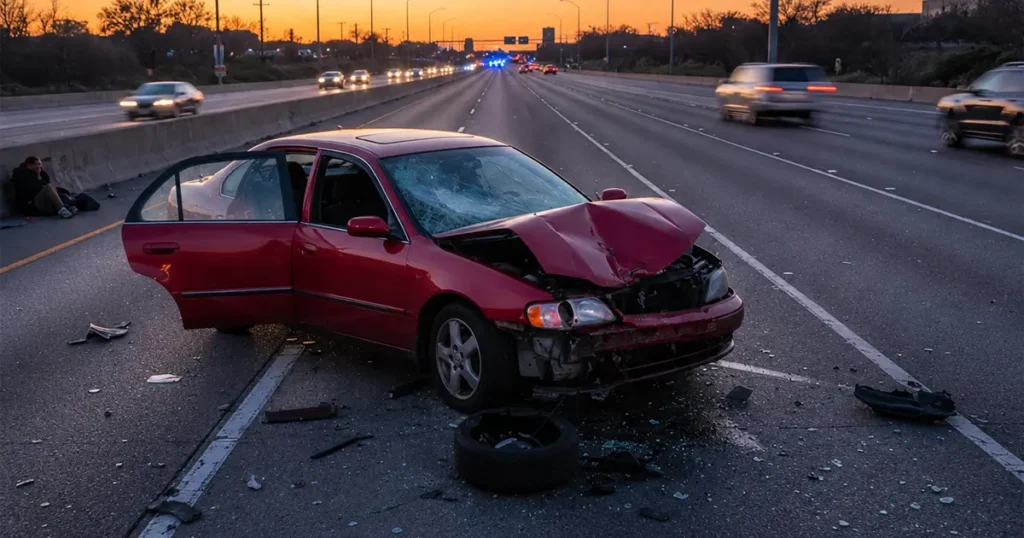
Leaving the scene of an accident, whether it involves property damage or serious injuries, can lead to criminal charges, license suspension, steep fines, and even prison time. Many drivers panic after a crash and make the costly mistake of driving away without realizing the serious legal consequences.
Whether you are facing charges or were injured by a hit-and-run driver, consulting an experienced Houston car accident lawyer can help you understand your rights and legal options. This guide explains Texas hit-and-run laws, the penalties for leaving the scene, and what every driver should know after an accident.
What Is a Hit and Run in Texas?
Under Texas Transportation Code Chapter 550, a hit and run occurs when a driver involved in an accident fails to stop, exchange information, or render aid to anyone injured at the scene. The legal term used in Texas is either “Failure to Stop and Render Aid” when someone is injured or killed, or “Failure to Stop and Give Information” when only property damage is involved. Texas law applies these obligations to every driver involved in an accident, regardless of who was actually at fault for causing the crash in the first place.
What Are Your Legal Duties After an Accident in Texas?
Texas law is specific about what drivers must do immediately after being involved in any accident, and failing to meet even one of these obligations can result in criminal charges.
- Stop your vehicle immediately at or as close to the scene as safely possible without obstructing traffic
- Check for injuries and call 911 if anyone appears to be hurt, since failure to render aid is a separate and serious offense
- Exchange your name, address, vehicle registration, driver’s license, and insurance information with all other parties involved
- If you hit an unattended vehicle, make a reasonable effort to locate the owner or leave a written note with your contact information securely attached to the vehicle
- If you damage a fence, mailbox, or other fixed property under Texas Transportation Code Section 550.025, the same duty to notify the property owner applies
Is a Hit and Run a Felony in Texas?
Whether a hit and run is charged as a misdemeanor or a felony depends entirely on the severity of the harm caused. Understanding where your situation falls is critical because the penalties vary significantly. If you were injured by a driver who fled the scene, an experienced personal injury lawyer Houston residents trust can help protect your rights while pursuing the compensation you deserve.
Property Damage Only
If the accident resulted only in property damage, leaving the scene is typically charged as a Class C or Class B misdemeanor. A Class C misdemeanor carries fines up to $500, while a Class B misdemeanor can result in fines up to $2,000 and up to 180 days in county jail. Even at the misdemeanor level, a conviction creates a criminal record affecting employment, insurance, and driving privileges.
Serious Bodily Injury
When an accident causes serious bodily injury, leaving the scene becomes a third-degree felony carrying two to ten years in state prison and fines up to $10,000. Serious bodily injury is defined as an injury creating a substantial risk of death, permanent disfigurement, or long-term loss of a bodily function. Even if the driver was not at fault for the crash, fleeing the scene converts the incident into a serious felony offense.
Death
If someone dies and the driver leaves the scene, Texas law classifies it as a second-degree felony under Texas Transportation Code Section 550.021, carrying two to twenty years in prison and fines up to $10,000. Prosecutors treat these cases aggressively, and convictions almost always result in significant prison time. This is one of the most severely punished traffic-related offenses in Texas, regardless of who caused the underlying accident.
What Are the Penalties for Hit and Run in Texas?
Here is a clear breakdown of how Texas penalties escalate based on the severity of the hit-and-run offense:
- Class C Misdemeanor: Property damage only, fine up to $500, no jail time in most cases
- Class B Misdemeanor: Property damage with aggravating factors, fines up to $2,000, up to 180 days in county jail
- Third Degree Felony: Serious bodily injury, 2 to 10 years in state prison, fines up to $10,000
- Second Degree Felony: Death of another person, 2 to 20 years in state prison, fines up to $10,000
- License Suspension: Texas may suspend your driving privileges following any hit-and-run conviction, regardless of the charge level
- Insurance Consequences: A hit-and-run conviction results in dramatically higher insurance premiums and may cause some carriers to cancel your policy altogether
- Civil Liability: In addition to criminal penalties, a hit-and-run driver faces civil liability for all damages, medical expenses, lost wages, and pain and suffering caused to the victim
What Should You Do If You Are the Victim of a Hit and Run?
Being struck by a driver who then flees the scene is a frightening and frustrating experience, but the steps you take immediately after the incident have a direct impact on your ability to recover compensation and help law enforcement identify the at-fault driver. Knowing what to do after a car accident in Texas applies equally when the other driver has fled the scene.
- Call 911 immediately and report the accident, providing as many details about the fleeing vehicle as possible, including color, make, model, and any portion of the license plate you were able to see
- Seek medical attention right away, even if injuries seem minor, since documented treatment from day one is critical to any insurance claim or lawsuit
- Take photos of the scene, your vehicle damage, any debris left behind, and any visible injuries before anything is moved or cleaned up
- Collect contact information from any witnesses who saw the accident or the fleeing vehicle
- File a police report and obtain a copy, since this document is essential for any insurance claim involving an unidentified driver
- Contact an attorney before speaking with your own insurance company about the incident
Can You Still Recover Compensation If the Driver Is Never Found?
Yes, Texas law provides several avenues for hit-and-run victims to recover compensation even when the at-fault driver is never identified. Your own insurance policy may be the most immediate and practical source of recovery, depending on the coverage you carry.
- Uninsured Motorist Coverage: Pays for your medical bills, lost wages, and pain and suffering when the at-fault driver cannot be identified or has no insurance
- Personal Injury Protection: Covers your medical expenses and a portion of lost wages regardless of fault, with no need to identify the other driver
- Collision Coverage: Pays to repair or replace your vehicle regardless of whether the other driver is ever found, subject to your deductible
- Civil Lawsuit: If the driver is eventually identified through law enforcement investigation, you have the right to pursue a civil lawsuit for the full extent of your damages under Texas personal injury law
Under Texas Civil Practice and Remedies Code Section 16.003, most personal injury claims must be filed within two years of the accident, so acting promptly to preserve your legal options is always the right approach.
Why Legal Representation Matters
Whether you are facing hit-and-run charges or you are a victim trying to recover compensation after a driver fled the scene, the legal process in these cases is more complex than most people expect. Insurance companies are quick to challenge claims involving unidentified drivers, and prosecutors pursue hit-and-run defendants aggressively, making professional legal guidance essential on both sides of these cases.
- Victims benefit from an attorney who can navigate uninsured motorist claims, challenge insurer denials, and pursue civil litigation if the driver is identified
- Defendants benefit from legal representation that can evaluate the strength of the prosecution’s evidence and identify any applicable defenses before charges escalate
- An attorney can challenge improper identification, argue that the driver was unaware an accident occurred, or present mitigating circumstances that may reduce the severity of the charge
- Understanding how car accident lawsuits work in Texas is critical for both victims pursuing compensation and defendants fighting to protect their future
- Acting quickly matters because evidence from a hit-and-run scene, including surveillance footage and witness recollections, disappears rapidly in the days following the incident
Involved in a Hit and Run in Texas? Contact the Law Office of Michael Bates
Hit and run cases in Texas carry serious consequences on both sides, and having an experienced attorney handling your case from the very beginning is the most effective way to protect your rights and your future. At The Law Office of Michael Bates, we help both victims pursuing compensation and individuals facing hit-and-run charges navigate the legal process with clarity and confidence. Contact us today for a free case evaluation with no fee unless we win.