
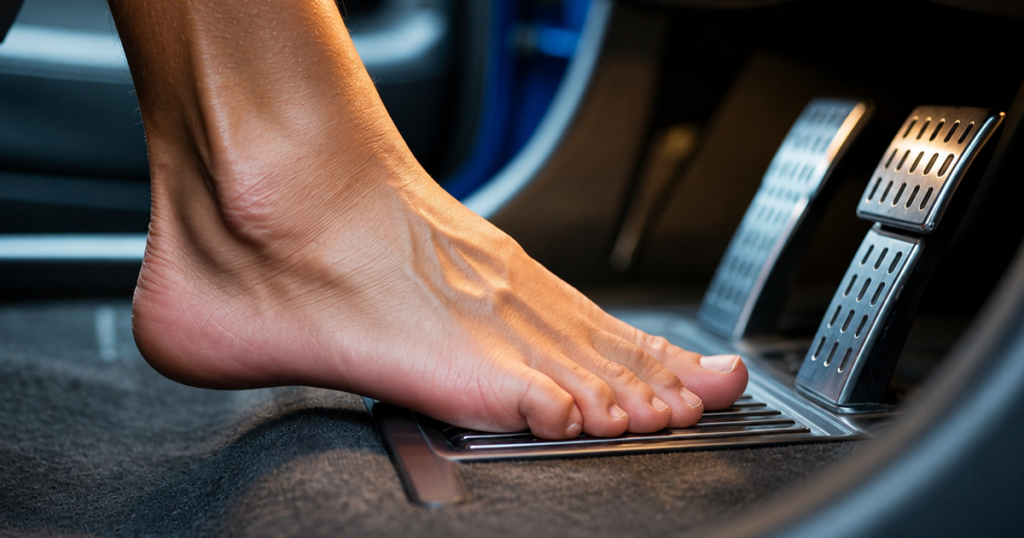
Driving barefoot in Texas is completely legal; there’s no law that requires shoes behind the wheel. It’s mostly a safety debate, not a legal one.
That said, if barefoot driving affects your control of the vehicle and contributes to an accident, it can still matter in a claim. In those situations, a Houston car accident attorney can help you understand fault and protect your rights.
Is Driving Barefoot Dangerous?
Driving barefoot is not illegal or automatically unsafe, but it can create certain risks depending on the situation. Safe vehicle control depends on a driver’s ability to maintain proper grip and pressure on the pedals. Possible risks include:
- Reduced grip on brake and accelerator pedals, especially on smooth or wet surfaces.
- Slipping feet during sudden braking or emergency stops.
- Slower or less precise reaction time in critical moments.
- Increased chance of foot injury during a collision.
- Inconsistent pressure when accelerating or braking.
Despite these risks, some drivers believe barefoot driving offers better pedal feel compared to loose footwear like flip-flops.
Can You Be Held Liable for Driving Barefoot?
Driving barefoot alone does not make you legally responsible for an accident, but it may become a factor in determining fault after a crash. Insurance companies often examine every detail that could have contributed to a collision.
Under Texas Civil Practice & Remedies Code § 33.001, Texas follows a modified comparative negligence rule. This means a driver can still recover damages if they are less than 51% at fault, but compensation may be reduced based on their percentage of responsibility. Insurance companies may argue that barefoot driving contributed to:
- Delayed braking response.
- Reduced pedal control during impact.
- Slower reaction time in emergencies.
- Increased driver negligence interpretation.
However, fault is never based on footwear alone. It depends on overall driver behavior, road conditions, and evidence from the accident.
Are Flip-Flops More Dangerous?
In many cases, flip-flops or loose footwear may actually be more dangerous than driving barefoot. Unlike bare feet, loose shoes can easily slip off or get stuck under pedals, creating serious driving hazards. Risks of flip-flops include:
- Getting trapped under brake or accelerator pedals.
- Slipping off during sudden braking.
- Reduced stability and pedal control.
- Delayed response during emergencies.
This is why some drivers prefer barefoot driving over unstable footwear, although proper closed-toe shoes remain the safest option overall.
What Happens if You Cause an Accident?
If a crash occurs while driving barefoot, investigators may check whether it affected your control of the vehicle. Barefoot driving isn’t illegal in Texas, but it can matter if it contributes to unsafe driving or a claim under Texas Transportation Code § 545.401 (Reckless Driving). Possible consequences include:
- Insurance investigations into fault.
- Comparative negligence arguments.
- Reduced compensation in injury claims.
- Higher insurance premiums.
- Possible traffic citations if negligence is proven.
Still, the main focus is always on driver behavior, not footwear alone.
Safety Tips for Driving
Even though barefoot driving is legal in Texas, safety should always come first. Drivers should focus on maintaining full control of their vehicle at all times. Helpful safety tips include:
- Wear secure, closed-toe shoes for maximum control.
- Avoid loose footwear like sandals or flip-flops.
- Keep pedals clean, dry, and unobstructed.
- Maintain proper seating position for full pedal reach.
- Stay fully alert and avoid distractions while driving.
Choosing the right footwear can improve reaction time and reduce accident risk.
When to Contact a Lawyer
After a crash, insurance companies may try to argue that barefoot driving contributed to the accident. This can affect fault determination and compensation under Texas law. You should contact a personal injury lawyer Houston if:
- Fault for the accident is being disputed.
- Serious injuries were involved.
- Insurance companies reduce or deny your claim.
- You are being blamed for unsafe driving.
- Settlement offers seem unfair or low.
An experienced attorney can investigate the accident, review evidence, handle insurance negotiations, and protect your rights throughout the claims process.
Need Legal Guidance?
Driving barefoot is not illegal in Texas, but drivers are still legally responsible for maintaining safe control of their vehicle at all times. While it is mostly a personal preference, it can become a factor in accident investigations if safety is questioned.
If you’ve been involved in a car accident and need legal guidance, The Law Office of Michael Bates can help you understand your options, protect your claim, and pursue fair compensation under Texas law.
Key Takeaways
- Driving barefoot is legal in Texas; no law prohibits it.
- Liability depends on negligence, not footwear alone.
- Barefoot driving may be considered in accident fault analysis.
- Texas follows comparative negligence under Texas Civil Practice & Remedies Code § 33.001.
- Unsafe driving behavior can still lead to liability under Texas Transportation Code § 545.401.
- Insurance companies may use driving conditions to assess fault and compensation.
- The focus in any claim is overall driver control and road safety, rather than footwear choice.