
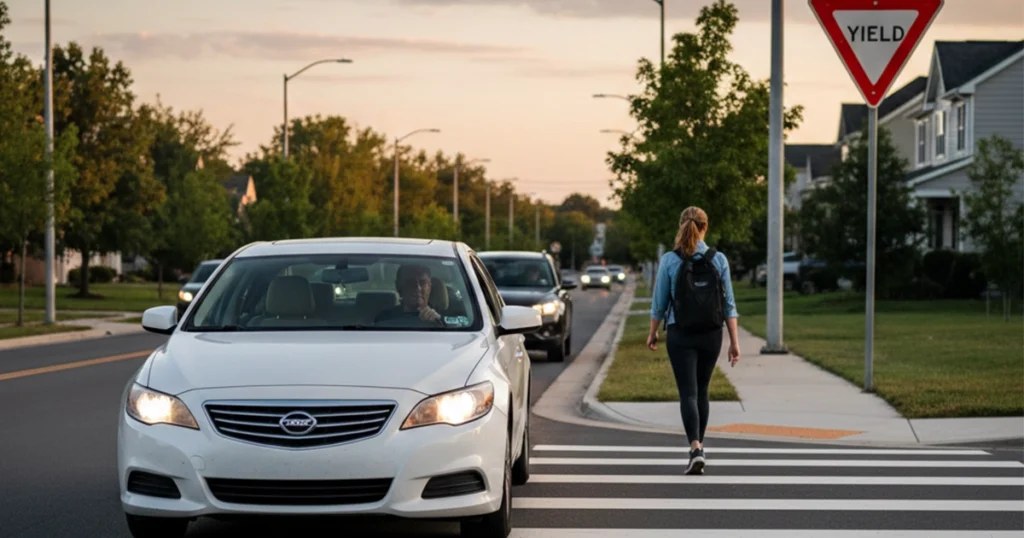
Driving in Houston requires more than knowing how to steer and brake; it demands a clear understanding of traffic control rules that determine right of way. One of the most misunderstood instructions on Texas roadways is the yield sign. Misinterpreting what “yield” means can lead to serious accidents, traffic citations, and complex disputes over fault. When these crashes occur, a car accident lawyer Houston is often needed to determine liability and protect the injured party’s legal rights. This guide explains what yielding means in practical terms and why it plays a critical role in safe driving throughout Houston.
What Does a Yield Sign Mean?
A yield sign requires drivers to slow down and give the right of way to other vehicles, pedestrians, or cyclists who are legally entitled to proceed. In Houston’s complex traffic environment, yield signs are placed in areas where traffic flow must be managed carefully to prevent collisions while keeping vehicles moving efficiently.
Understanding where and how yield signs apply helps drivers anticipate potential hazards and avoid costly mistakes.
Highway Entrance and Exit Ramps
Yield signs are commonly posted at entrance and exit ramps along major Houston roadways such as I-10, I-45, US-59, and the 610 Loop. Drivers entering these roadways must allow vehicles already traveling at highway speeds to pass before merging. Failure to yield in these areas is a frequent cause of high-speed collisions.
Roundabouts and Traffic Circles
At roundabouts, drivers approaching the circle must yield to traffic already inside. Entering without waiting for a safe opening can lead to side-impact crashes and multi-vehicle accidents, particularly in high-traffic neighborhoods.
Intersections Without Traffic Signals
Some Houston intersections rely on yield signs instead of traffic lights. In these locations, drivers must defer to cross traffic that does not face a yield sign and proceed only when the intersection is clear.
Pedestrian and Bicycle Crossings
In downtown Houston, residential communities and mixed-use areas, yield signs often protect pedestrians and cyclists. Drivers are required to yield when individuals are lawfully crossing the roadway, even if vehicle traffic appears light.
Yield vs. Stop
Yield and stop signs serve different purposes, and confusing the two can create dangerous situations.
- Yield signs require caution and deference but allow continued movement if the way is clear.
- Stop signs require a complete stop every time, regardless of traffic conditions.
Treating a yield sign like a stop sign can disrupt traffic flow, while treating it like a green light can cause collisions.
What “Yield” Means Under Texas Traffic Law
Under Texas traffic law, yielding means giving the right of way to another vehicle, pedestrian, or cyclist who is legally entitled to proceed first. Texas Transportation Code § 545.151 requires drivers facing a yield sign to slow down and, if necessary, stop to allow traffic or pedestrians already in the intersection, or approaching closely enough to constitute an immediate hazard, to pass before entering. Additionally:
- Texas Transportation Code § 545.152 covers the general rules for right-of-way at intersections, requiring drivers to yield to vehicles already in the intersection or those approaching from a direction with the right-of-way.
- Texas Transportation Code § 545.155 addresses vehicles entering a roadway from ramps, driveways, or private roads, obligating them to yield to all traffic already traveling on the main road.
- Texas Transportation Code § 552.006 ensures pedestrian right-of-way, obligating drivers to yield when individuals are crossing streets in marked or unmarked crosswalks.
Unlike a stop sign, a yield sign does not always require a complete stop. However, it does impose a legal duty to exercise reasonable judgment. If proceeding would interfere with another road user’s lawful movement, the driver must wait until it is safe to continue. A violation of this duty can result in a traffic citation and may be used as evidence of negligence if a crash occurs.
How to Respond to a Yield Sign
Houston’s roadways are fast-paced and often congested, making proper yielding essential. When approaching a yield sign, drivers should:
- Reduce speed well in advance
- Scan for oncoming vehicles, pedestrians, and cyclists
- Allow traffic with the right of way to proceed uninterrupted
- Stop completely if necessary to avoid a collision
Failing to slow down or misjudging another driver’s speed can quickly turn a routine merge into a serious crash.
Why Yielding Is Critical on Houston Roads
Houston consistently ranks among the busiest driving environments in Texas. High traffic volume, frequent construction, feeder roads, and unpredictable weather all increase the importance of yielding correctly. Proper yielding:
- Reduces intersection and merging collisions
- Improves traffic flow during peak hours
- Protects pedestrians and cyclists
- Lowers the risk of being found at fault in an accident
Many serious crashes occur not because drivers are speeding, but because they fail to yield when required.
Legal Consequences of Failing to Yield
Failure to yield is a common traffic violation in Texas and often plays a central role in determining fault after an accident. Drivers who fail to yield may face:
- Traffic citations and fines
- Points on their driving record
- Increased insurance premiums
- Financial liability for injuries and property damage
When an accident results in injuries, failure to yield is frequently used as evidence of negligence in insurance claims and lawsuits.
How Fault Is Determined in Failure-to-Yield
After a crash, insurance companies and attorneys closely examine who had the right of way. Evidence may include:
- Police crash reports
- Traffic camera or surveillance footage
- Witness statements
- Vehicle damage patterns
- Intersection design and signage
Even a partial fault can reduce compensation, making accurate liability analysis essential.
When to Contact a Houston Car Accident Lawyer
Failure-to-yield accidents often lead to disputes over responsibility. If you were injured or blamed in a yield-related crash, speaking with an experienced Houston car accident lawyer can help protect your rights. Our personal injury lawyer Houston can:
- Investigate the crash and establish fault
- Handle insurance negotiations
- Challenge improper citations or blame
- Pursue compensation for medical bills, lost income, and pain and suffering
Legal guidance is especially important when injuries are serious or liability is contested.
Failure to Yield in Houston
Yield signs are not mere suggestions; they are enforceable legal instructions designed to keep traffic flowing safely and prevent accidents. Understanding when and how to yield is critical to avoid collisions, traffic citations, and liability issues under Texas law.
If you or a loved one has been injured in a failure-to-yield accident in Houston, The Law Office of Michael Bates can provide experienced legal guidance. Our attorneys help clients navigate complex liability issues, advocate for fair compensation, and ensure that your rights are fully protected. Knowing your legal options is just as important as knowing the rules of the road.